
The Always-On Era of Fan Engagement
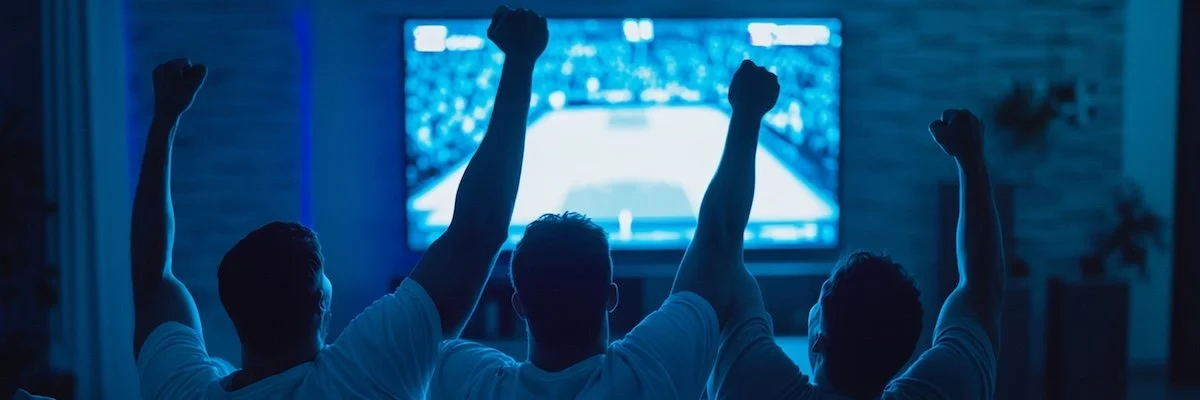
For much of the sports industry’s history, fan engagement followed a fairly predictable rhythm. Attention built before a game, peaked during live competition, and gradually receded once the final whistle blew. Media reinforced that cadence, as fans watched broadcasts at designated times, consumed highlights afterward, and then waited for the next event.
That pattern no longer defines the relationship between fans and sport.
Over the past decade, and especially in recent years, media consumption has become far more continuous, fragmented, and participatory. According to Deloitte’s Sports Industry Outlook, more than 90% of Gen Z and millennial fans engage with sports content through social media. At the same time, Nielsen research highlights the growing role of streaming and multiplatform viewing in how audiences follow sports today.
The result is a fan relationship that no longer begins at kickoff and ends when the game is over. It is ongoing, shaped by clips, commentary, creators, social conversation, direct messaging, commerce, and community. In other words, fan engagement no longer follows the schedule because fandom itself no longer does.
Media Did Not Just Expand Access. It Changed Behavior.
It is tempting to think of digital media simply as a broader distribution layer for sports content. In reality, it has done something more significant. It has changed the way fans behave.
Multiscreen viewing continues to rise, particularly among younger audiences, meaning live sports is often experienced alongside social media, messaging, and other forms of digital interaction. Research from Nielsen and Deloitte suggests that fans are increasingly allocating their attention across a wider mix of platforms, with social video and creator driven content playing a growing role.
This shift moves fan engagement from a series of scheduled touchpoints into a continuous stream of interactions. A fan may watch a match live, react in real time on social platforms, consume highlights later that evening, and return the next morning for analysis or behind the scenes content. The live event still matters enormously, but it is no longer the sole center of gravity.
The New Competitive Advantage Is Continuity
For teams, leagues, and sponsors, this shift creates both an opportunity and a challenge.
The opportunity lies in the expansion of touchpoints. There are now more moments to reach fans, understand them, and create value around their behavior. The challenge is that many engagement strategies are still built around an older model, one in which the game itself is treated as the primary moment that matters.
That mindset is increasingly outdated.
The organizations that stand out today are not simply producing more content. They are building connective tissue between moments. They recognize that fandom now moves fluidly across platforms and across time, and they design engagement strategies that reflect that reality. A preseason announcement, a player interview, a short form highlight, a contest entry, and a postgame recap are no longer isolated activities. Together, they form a connected fan journey.
Why This Matters for Fan Engagement Data
This evolution also changes what teams should measure.
If fan engagement is no longer confined to game day, then it cannot be understood through isolated event metrics alone. The more relevant question is not just how many fans showed up for a moment, but how often they return, where they choose to participate, and what those patterns reveal over time.
At FanCompass, this is the shift we continue to see across the industry. The most effective organizations are moving beyond one off activations and thinking more deliberately about how digital fan engagement can support an ongoing relationship with their audience. The real value is not simply in capturing attention at a single point in time, but in understanding the behavior that connects one moment to the next.
From Scheduled Audiences to Connected Fans
Sports will always have defining moments. Live competition remains the emotional center of fandom, and nothing in digital media changes that.
What has changed is everything around it.
Fans no longer engage according to a broadcast schedule alone. They move through a broader media ecosystem in which attention is continuous and connection is constantly reinforced. For sports organizations, the implication is clear: the future of fan engagement belongs to those who understand not only the moments fans watch, but the much larger journey they now experience around the game.